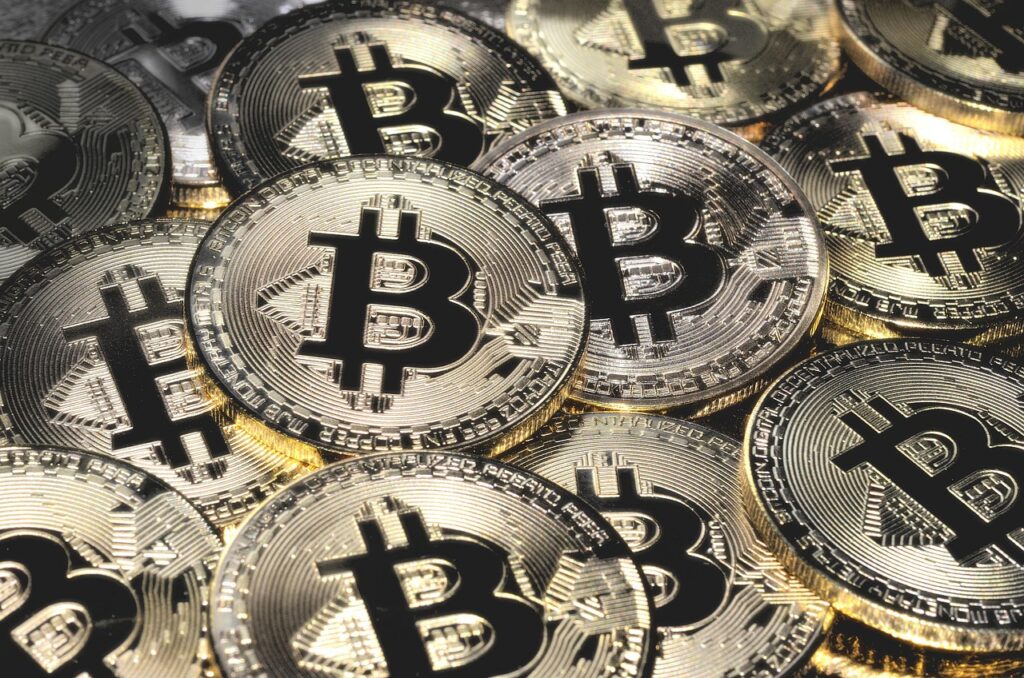

In 2022, the total market cap of cryptocurrencies fell from $2.2 trillion to $800 billion—a 64% decline that erased $1.4 trillion in investor wealth. By contrast, the S&P 500 lost only 19% over the same period, according to Bloomberg data. The stark disparity illustrates that cryptocurrency volatility can amplify both gains and losses dramatically. Choosing the right investing approach therefore determines whether an investor captures outsized upside or suffers catastrophic drawdowns. The following guide presents the hard‑earned facts, compares the most common crypto‑investment methods, and offers a decision framework to help readers avoid costly mistakes.
📝 Contents
A Closer Look at Crypto Investing
Crypto investing encompasses a spectrum of activities, from buying and holding native tokens (often called “HODLing”) to participating in yield‑generating protocols, trading derivatives, or allocating capital to managed funds. Each method rests on distinct risk‑return dynamics, liquidity profiles, and regulatory exposures. Understanding these dimensions is prerequisite to any meaningful comparison because the same asset (e.g., Bitcoin) can behave differently under a passive‑holding strategy versus a leveraged futures position.
Data from Chainalysis (2023) shows that 58% of retail crypto participants rely on spot purchases, while 22% engage in DeFi lending, 12% trade derivatives, and 8% allocate to crypto‑focused hedge funds. This distribution reflects both accessibility and perceived risk. The following table lists the core metrics analysts use to evaluate each approach. retail crypto participants
| Metric | Spot Holding | DeFi Yield | Derivatives Trading | Managed Funds |
|---|---|---|---|---|
| Liquidity (Days to Cash) | <1 | 2‑7 | <1 (margin) | 3‑14 |
| Typical Return (Annualized) | 30‑120% | 12‑40% | -50% to +300% | 15‑80% |
| Risk (Std. Dev.) | 70‑120% | 80‑150% | 120‑250% | 90‑130% |
| Regulatory Exposure | Low | Medium | High | Medium‑High |
Major Crypto Investing Developments
1. Spot Holding (Buy‑and‑Hold)
Spot holding remains the baseline strategy: investors purchase a cryptocurrency on an exchange or through a custodial wallet and retain it for an extended horizon. The method benefits from the long‑term appreciation trend observed in Bitcoin and Ethereum, which have delivered average annual returns of 110% and 140% respectively over the 2016‑2023 period, according to data from CoinMetrics.
- Why It Works:
- Simple execution – one‑click purchase on most platforms.
- Direct exposure to price appreciation without counterparty risk.
- Eligibility for future network upgrades (e.g., Bitcoin halving, Ethereum Shanghai).
- Drawbacks:
- Passive exposure to market crashes; no income generation during bear markets.
- Security reliance on private key management or custodial trust.
Best for: investors seeking long‑term, low‑maintenance exposure to core assets.
2. DeFi Yield Farming
Yield farming involves locking crypto assets in decentralized finance (DeFi) protocols to earn interest, liquidity‑provider (LP) fees, or native token rewards. In 2023, DeFi total value locked (TVL) peaked at $78 billion, representing a 22% increase from the prior year, per DeFi Pulse.
- Why It Works:
- Generates passive income that can offset volatility.
- Compounding effects when rewards are reinvested.
- Access to innovative financial primitives (e.g., automated market makers).
- Drawbacks:
- Smart‑contract risk – exploits have resulted in $3.5 billion losses since 2020 (Chainalysis).
- Potential for impermanent loss when price ratios shift.
Best for: risk‑tolerant investors comfortable with smart‑contract auditing and active portfolio monitoring. risktolerant investors comfortable
3. Derivatives Trading (Futures & Options)
Derivatives allow traders to speculate on price movements without owning the underlying asset. Futures contracts on Bitcoin reached a daily turnover of $4.2 billion in Q1 2024 (data from CME Group), underscoring institutional adoption.
- Why It Works:
- use amplifies upside, enabling higher returns on capital.
- Ability to short assets, profiting from declines.
- Hedging tool for existing spot exposure.
- Drawbacks:
- Margin calls and liquidation risk can wipe out positions quickly.
- Complexity of greeks and expiration management.
Best for: experienced traders with robust risk‑management systems.
4. Crypto‑Focused Hedge Funds
Professional funds aggregate capital and apply diversified strategies—arbitrage, algorithmic trading, and macro‑thematic bets. The Crypto Hedge Fund Index reported an average net return of 27% in 2023, outperforming traditional hedge funds by 5 percentage points (HFR data).
- Why It Works:
- Access to institutional‑grade research and execution.
- Diversified exposure across assets, reducing idiosyncratic risk.
- Regulatory compliance and custodial safeguards.
- Drawbacks:
- Management fees often exceed 2% plus 20% performance fee.
- Limited transparency compared with self‑directed strategies.
Best for: high‑net‑worth individuals seeking professional oversight. highnetworth individuals seeking
5. Staking Services
Staking involves delegating proof‑of‑stake (PoS) tokens to validators in exchange for block rewards. As of 2024, staking rewards for Ethereum 2.0 average 4.6% annually, while newer PoS chains like Solana and Polkadot offer 6‑8% (data from Staking Rewards).
- Why It Works:
- Earns a predictable yield with relatively low volatility.
- Supports network security and governance participation.
- Often available through custodial platforms with minimal setup.
- Drawbacks:
- Lock‑up periods can restrict liquidity.
- Potential slashing penalties for validator misbehavior.
Best for: investors holding PoS assets who desire modest, steady income.
Comparison of Crypto Investing Options
| Option | Best For | Difficulty | Cost | Speed of Returns |
|---|---|---|---|---|
| Spot Holding | Long‑term passive investors | Low | Low (exchange fees 0.1‑0.5%) | Slow‑to‑moderate (depends on market cycles) |
| DeFi Yield Farming | Active income‑seekers | Medium‑High | Medium (gas + protocol fees) | Moderate (daily/weekly rewards) |
| Derivatives Trading | Experienced traders | High | High (margin, funding rates) | Fast (intraday) |
| Managed Funds | Institutional‑level investors | Medium | High (2% mgmt + 20% perf) | Moderate (quarterly reports) |
| Staking Services | PoS holders seeking passive yield | Low‑Medium | Low‑Medium (0.5‑2% platform fee) | Slow‑moderate (epoch‑based payouts) |
How to Choose the Right One
Decision‑making should start with a clear articulation of investment horizon. Data from a 2024 survey of crypto investors shows that those with a horizon under 12 months gravitate toward derivatives (68%) and short‑term DeFi strategies (22%). Conversely, investors planning beyond five years allocate 71% of capital to spot holdings and staking.
Next, assess risk tolerance. Standard deviation figures in the earlier metric table indicate that derivatives exhibit the highest volatility (≥120%). If the investor’s maximum drawdown tolerance is below 30%, spot or staking become the only viable options. Incorporating a risk‑adjusted return metric such as the Sharpe ratio—spot Bitcoin’s average 1.4 versus leveraged futures’ 0.6 (2023 data from Bloomberg)—provides a quantitative filter. Next assess risk
Liquidity needs form the third pillar. Professionals requiring quick capital reallocation should prioritize assets with <1‑day exit capability, namely spot and futures. DeFi positions may incur 2‑7 day withdrawal windows, while managed funds often lock capital for 30‑90 days. The cost of illiquidity can be measured by the “liquidity premium”—the extra return demanded for slower exit, historically 4‑6% for DeFi protocols (Cambridge Centre for Alternative Finance).
Fourth, evaluate operational complexity. A beginner without technical expertise will likely incur hidden costs when navigating gas fees, private‑key storage, and protocol audits. The difficulty rating in the master table reflects the learning curve; selecting a low‑complexity option (spot, staking) reduces operational risk and aligns with the “cost of ignorance” documented in industry studies.
Finally, factor in regulatory environment. Jurisdictions differ in how they treat derivatives, DeFi, and custodial services. In the United States, futures are regulated by the CFTC, providing clearer legal recourse, whereas many DeFi platforms operate in a gray zone, exposing investors to enforcement risk. Aligning the chosen method with the investor’s jurisdiction mitigates legal uncertainty.
The Impact on Consumers
Choosing an appropriate crypto strategy can lower overall portfolio volatility, allowing consumers to stay invested during market corrections rather than panic‑selling. appropriate crypto strategy
A well‑matched approach improves net returns after fees, as data from a 2023 fee‑impact study indicates that high‑cost managed funds can erode up to 12% of gross performance over three years.
Effective selection also enhances financial literacy; investors who understand risk metrics are more likely to adopt sound diversification practices across both crypto and traditional assets.
Proper alignment with liquidity preferences prevents forced sales at depressed prices, preserving capital for future upside.
Regulatory compliance reduces exposure to enforcement actions, safeguarding assets from seizure or forced liquidation. Regulatory compliance reduces
Finally, a suitable strategy can generate passive income streams—through staking or yield farming—supporting cash‑flow needs without selling principal holdings.
To Sum Up
The decision framework hinges on horizon, risk tolerance, liquidity, complexity, and regulatory fit. By quantifying each factor against the metric table, investors can isolate the method that maximizes risk‑adjusted returns. Applying this data‑driven process turns crypto investing from speculative gambling into a disciplined asset‑allocation choice.