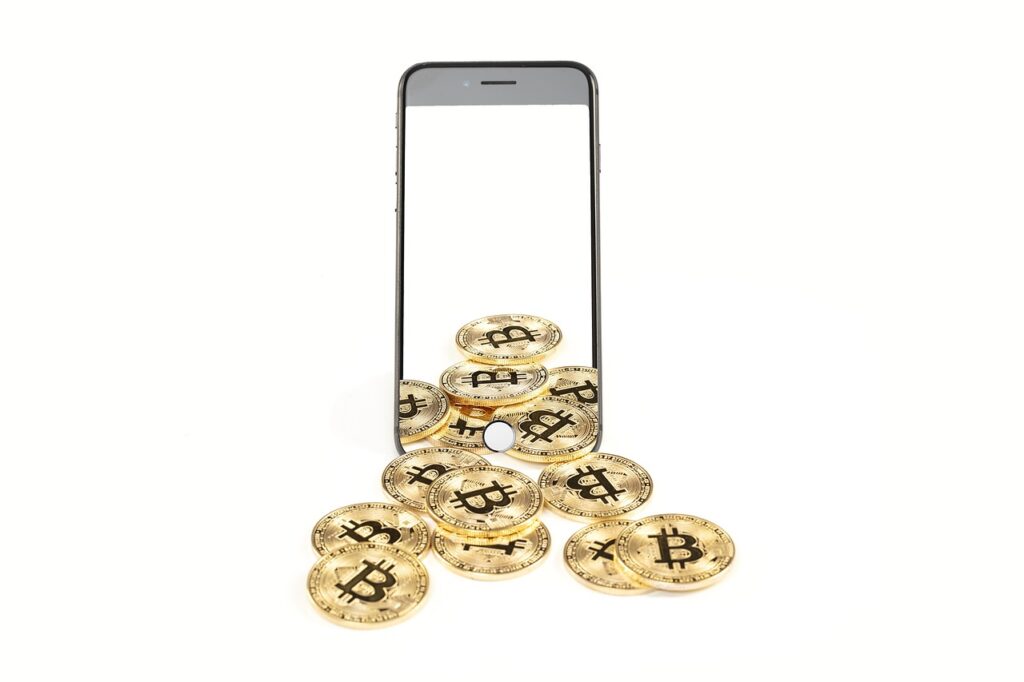

Cryptocurrency is reshaping how people think about money, finance, and the internet. In a world where traditional banks are no longer the only gatekeepers of value, digital currencies offer new ways to store, send, and grow wealth. Selecting the right cryptocurrency approach matters because it influences security, cost, speed, and the overall experience for both newcomers and seasoned users. Whether the goal is everyday spending, long‑term investing, or building decentralized applications, the choice determines how smoothly those goals are achieved. This article walks through the fundamentals, compares five major cryptocurrency options, and provides a clear framework for making an informed decision.
&#; What's In This Article
The Basics of Cryptocurrency
Cryptocurrency—often shortened to crypto—is a type of digital or virtual money that uses cryptography (the science of secret codes) to secure transactions and control the creation of new units. Unlike physical cash, cryptocurrency exists only in computer networks and does not have a central authority like a government or bank. The most well‑known example is Bitcoin, which introduced the concept of a decentralized ledger called a blockchain (a public, tamper‑proof record of all transactions). units Unlike physical
Before diving into specific options, readers should understand four key concepts: decentralization (the distribution of power away from a single point), consensus mechanisms (the rules that participants follow to agree on the state of the ledger), tokenomics (the economic model governing a cryptocurrency’s supply and demand), and wallet security (the methods used to store private keys, which are secret codes that grant access to funds). Grasping these ideas makes it easier to evaluate why one crypto might suit a particular need better than another. Before diving into
| Metric | Why It Matters |
|---|---|
| Decentralization Level | Higher decentralization reduces single‑point failure risk and censorship. |
| Consensus Type | Impacts security, speed, and energy consumption. |
| Transaction Speed | Affects usability for everyday purchases. |
| Token Supply Model | Influences inflation, scarcity, and price stability. |
Major Cryptocurrency Developments
Bitcoin (BTC)
Bitcoin is the original cryptocurrency, created in 2009 by an anonymous person or group known as Satoshi Nakamoto. It operates on a proof‑of‑work (PoW) consensus, where miners solve complex puzzles to add blocks to the blockchain. original cryptocurrency created
- Why It Works:
- Strong network effect—most users and merchants recognize Bitcoin.
- Finite supply of 21 million coins creates scarcity.
- Highly secure due to massive hashing power.
- Challenges:
- Transaction fees can be high during congestion.
- Proof‑of‑work consumes significant electricity.
Best for: Long‑term store of value and portfolio diversification.
Ethereum (ETH)
Ethereum expands the idea of cryptocurrency by adding a programmable layer called smart contracts (self‑executing code that runs when conditions are met). It recently transitioned to proof‑of‑stake (PoS), where validators lock up tokens to secure the network. programmable layer called
- Why It Works:
- Supports decentralized applications (dApps) across finance, gaming, and more.
- PoS reduces energy use dramatically.
- Large developer community drives innovation.
- Challenges:
- Scalability issues can cause network congestion.
- Complexity may overwhelm beginners.
Best for: Building dApps, earning staking rewards, and accessing a vibrant ecosystem. Building dApps earning
Binance Smart Chain (BSC)
Binance Smart Chain is a blockchain launched by the Binance exchange that mirrors Ethereum’s smart‑contract capabilities while offering faster block times and lower fees. Binance Smart Chain
- Why It Works:
- Low transaction costs make it attractive for small‑scale users.
- Compatibility with Ethereum tools eases migration.
- High throughput supports rapid DeFi (decentralized finance) activity.
- Challenges:
- More centralized—validators are limited and partly controlled by Binance.
- Security incidents have occurred due to rapid growth.
Best for: Cost‑sensitive DeFi participants and developers seeking quick deployment.
Solana (SOL)
Solana is known for its high‑performance architecture, using a unique proof‑of‑history (PoH) mechanism that timestamps transactions before they are processed. highperformance architecture using
- Why It Works:
- Extremely fast transaction speeds (up to 65,000 TPS).
- Very low fees enable micro‑transactions.
- Growing ecosystem of NFTs (non‑fungible tokens) and Web3 projects.
- Challenges:
- Network outages have happened due to validator overload.
- Relatively newer—less battle‑tested than Bitcoin or Ethereum.
Best for: High‑frequency traders, NFT creators, and applications needing ultra‑low latency. applications needing ultralow
Cardano (ADA)
Cardano follows a research‑first approach, implementing peer‑reviewed academic papers into its protocol. It uses a proof‑of‑stake model called Ouroboros, designed for provable security. researchfirst approach implementing
- Why It Works:
- Strong emphasis on formal verification reduces bugs.
- Energy‑efficient PoS design.
- Focus on interoperability and sustainability.
- Challenges:
- Slower rollout of smart‑contract functionality.
- Smaller developer community compared to Ethereum.
Best for: Users prioritizing academic rigor, sustainability, and long‑term ecosystem stability.
Side‑by‑Side Comparison
| Option | Best For | Difficulty | Cost | Speed |
|---|---|---|---|---|
| Bitcoin (BTC) | Store of value | Medium | High (fees vary) | Low‑medium |
| Ethereum (ETH) | dApp development, staking | Medium‑high | Medium | Medium |
| Binance Smart Chain (BSC) | Low‑cost DeFi | Low‑medium | Low | High |
| Solana (SOL) | High‑speed trading, NFTs | Medium | Very low | Very high |
| Cardano (ADA) | Sustainable, academically‑driven projects | Medium | Low‑medium | Medium |
How to Choose the Right One
Choosing a cryptocurrency is similar to picking a vehicle: the right model depends on the path, the terrain, and personal preferences. The first decision factor is purpose. If the primary goal is preserving wealth over decades, a highly secure, low‑inflation asset like Bitcoin may be ideal. For building decentralized applications, a platform with robust smart‑contract capabilities such as Ethereum or Solana makes more sense. right model depends
The second decision factor is technical comfort level. Beginners may prefer networks with intuitive wallet interfaces and lower learning curves, like Binance Smart Chain, whereas developers comfortable with Solidity (Ethereum’s programming language) might gravitate toward Ethereum despite its higher complexity. second decision factor
The third decision factor involves cost tolerance. Transaction fees can erode small‑scale usage; therefore, users who plan to move modest amounts frequently should evaluate low‑fee environments such as Solana or BSC. Conversely, those who transact rarely can accept higher fees in exchange for stronger decentralization. third decision factor
The fourth decision factor is security and decentralization appetite. Highly decentralized networks (Bitcoin, Ethereum) distribute validation power across thousands of nodes, reducing the risk of censorship or single‑point attacks. More centralized solutions (BSC) may offer speed and cost benefits but come with increased trust in the governing entity.
Finally, the fifth decision factor is ecosystem maturity. A vibrant ecosystem supplies tools, documentation, and community support. Ethereum leads in this area, while newer chains like Cardano are still expanding. Assess the availability of wallets, exchanges, and developer resources before committing. fifth decision factor
Why People Are Paying Attention
Picking the right cryptocurrency can provide financial inclusion, allowing individuals without traditional bank access to participate in global commerce. It also offers a hedge against inflation in regions where local currencies lose value quickly. provide financial inclusion
Secure, decentralized assets protect personal wealth from government seizure or institutional failure, giving users greater control over their finances. Secure decentralized assets
Fast, low‑fee networks enable micro‑transactions, opening new business models such as pay‑per‑use services, gaming micro‑purchases, and content creator tipping.
Staking and yield‑earning mechanisms on PoS networks let holders generate passive income simply by holding tokens, turning idle assets into productive capital. holders generate passive
Interoperable smart contracts empower innovative applications—from decentralized finance that removes intermediaries to supply‑chain tracking that enhances transparency. Interoperable smart contracts
Finally, participation in a growing digital economy can increase exposure to emerging technologies, positioning users at the forefront of future financial and technological trends. growing digital economy
Worth Remembering
Understanding purpose, cost, security, and ecosystem health forms the core framework for evaluating any cryptocurrency. By matching these criteria to personal goals, the selection process becomes a logical, confidence‑building exercise. With the right choice, cryptocurrency can serve as a powerful tool for financial empowerment and technological innovation.