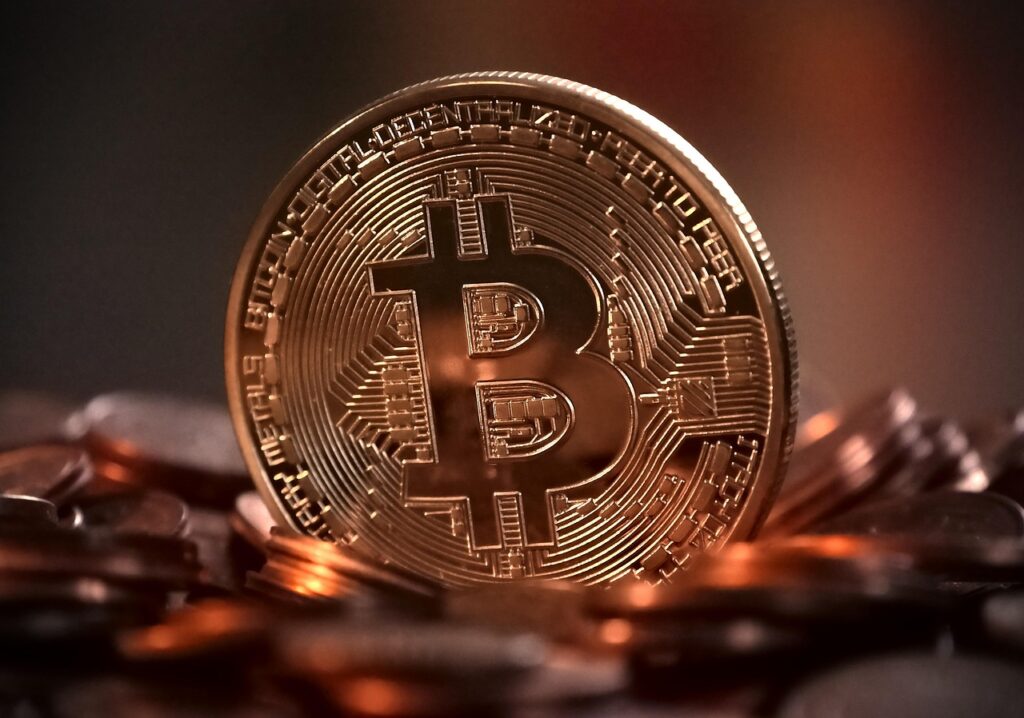

Imagine walking into a bustling coffee shop in downtown Austin. The barista asks, “Cash or crypto?” A regular, Maya, pulls out her phone, scans a QR code, and pays for her latte with 0.0025 ETH. The transaction completes in seconds, no bank in sight, and the barista smiles, noting the rising trend of digital payments. This scene, once sci‑fi, is now a daily reality for millions, illustrating how cryptocurrency is reshaping everyday commerce.
For anyone watching the financial world evolve, the question isn’t “if” cryptocurrency will matter, but “how” and “when” it will become a staple in personal and business finance. From Bitcoin’s humble beginnings in a 2008 whitepaper to today’s multi‑billion‑dollar market, the path is filled with stories of innovation, volatility, and transformative potential.
📝 What You'll Learn
Defining Cryptocurrency
Cryptocurrency is a form of digital or virtual currency that uses cryptography for security, making it difficult to counterfeit or double‑spend. Unlike traditional fiat money, it operates on decentralized networks—most commonly blockchain technology—where transactions are recorded across a distributed ledger maintained by participants called nodes. doublespend Unlike traditional
The term encompasses a wide array of assets, from Bitcoin (BTC), the pioneering coin launched by the pseudonymous Satoshi Nakamoto, to newer tokens like Solana (SOL) and stablecoins such as USDC that peg their value to real‑world currencies. While some view crypto as an investment vehicle, others see it as a foundational layer for decentralized applications, smart contracts, and even new governance models.
| Feature | Bitcoin | Ethereum | USDC (Stablecoin) |
|---|---|---|---|
| Launch Year | 2009 | 2015 | 2015 |
| Consensus Mechanism | Proof‑of‑Work | Proof‑of‑Stake (post‑merge) | Fiat‑backed reserve |
| Supply Cap | 21 million | No hard cap | Unlimited (issued as needed) |
| Primary Use | Store of value | Smart contracts | Stable payments |
Leading Cryptocurrency Solutions
1. Bitcoin (BTC)
Bitcoin remains the original and most recognized cryptocurrency, often referred to as digital gold. Its primary appeal lies in scarcity, a fixed supply of 21 million coins, and a robust security model built on proof‑of‑work.
Transactions settle on the Bitcoin blockchain, a public ledger visible to anyone. While transaction fees can spike during network congestion, layer‑2 solutions like Lightning Network are mitigating latency and cost.
- What You Gain:
- Store of value: A hedge against inflation due to limited supply.
- High liquidity: Easily convertible on most exchanges.
- Network security: Decentralized mining makes attacks costly.
2. Ethereum (ETH)
Ethereum introduced programmable money through smart contracts, enabling developers to build decentralized applications (dApps) on its platform. The network transitioned to proof‑of‑stake in 2022, reducing energy consumption by over 99%.
Its ecosystem supports DeFi protocols, NFTs, and enterprise solutions, making it a versatile foundation for digital innovation. ecosystem supports DeFi
- What You Gain:
- Smart contract capability: Automate agreements without intermediaries.
- Vibrant developer community: Thousands of dApps and tools.
- Scalability roadmap: Sharding and rollups aim to boost throughput.
3. Binance Smart Chain (BSC)
Binance Smart Chain offers a high‑performance environment compatible with Ethereum’s tooling, but with lower fees and faster block times. It quickly became the go‑to chain for many DeFi projects seeking cost‑effective transactions.
Critics point to its relative centralization, as Binance controls a significant portion of validator nodes. Nonetheless, its rapid adoption showcases a market demand for efficient, low‑cost platforms.
- What You Gain:
- Low transaction costs: Ideal for frequent trades.
- Fast block times: Approximately 3 seconds per block.
- Ethereum compatibility: Easy migration of existing dApps.
4. Solana (SOL)
Solana boasts one of the highest throughput rates in the crypto space, handling up to 65,000 transactions per second thanks to its unique proof‑of‑history consensus combined with proof‑of‑stake.
Its ecosystem has attracted NFT marketplaces, gaming platforms, and high‑frequency trading applications, though network outages in 2022 sparked discussions about reliability.
- What You Gain:
- Massive scalability: Supports high‑volume use cases.
- Developer incentives: Grants and hackathons fuel growth.
- Growing NFT scene: Low minting costs attract creators.
5. Ripple (XRP)
Ripple focuses on cross‑border payments, partnering with banks and financial institutions to enable near‑instant settlement. Its consensus algorithm differs from typical proof‑of‑work or proof‑of‑stake, using a network of trusted validators. crossborder payments partnering
Legal challenges with the SEC have created uncertainty, yet the technology continues to be adopted by several global payment corridors.
- What You Gain:
- Fast international transfers: Settlements in seconds.
- Low fees: Minimal cost compared to traditional correspondent banking.
- Bank integration: Direct pipelines to legacy finance.
Why This Matters to You
✔ Diversification of Investment Portfolio
Adding cryptocurrency offers exposure to an asset class that behaves differently from stocks or bonds, potentially smoothing overall portfolio volatility.
✔ Access to Global Markets
Cryptos are borderless; anyone with internet access can trade, invest, or remit funds without relying on local banking infrastructure. remit funds without
✔ Inflation Hedge Potential
Assets like Bitcoin, with capped supplies, provide a counterbalance to fiat currencies that can be printed in unlimited amounts.
✔ Participation in Emerging Technologies
Engaging with platforms like Ethereum opens doors to decentralized finance, NFTs, and decentralized autonomous organizations (DAOs).
✔ Lower Transaction Costs Lower Transaction Costs
For remittances and micro‑payments, crypto often beats traditional channels, cutting fees dramatically.
✔ Financial Inclusion
Unbanked populations can store value and transact using just a smartphone, fostering economic participation where banks are scarce.
Emerging Directions
- Integration of Central Bank Digital Currencies (CBDCs)
- Expansion of Decentralized Finance (DeFi) Protocols
- Growth of Layer‑2 Scaling Solutions
- Adoption of Sustainable Consensus Mechanisms
- Interoperability Standards Across Blockchains
Nation‑states are piloting digital versions of their fiat money, blending blockchain transparency with sovereign control, potentially reshaping monetary policy.
DeFi will move beyond lending and DEXs, incorporating insurance, derivatives, and real‑world asset tokenization, broadening financial services accessibility. DeFi will move
Technologies like Optimistic Rollups and zk‑Rollups will alleviate congestion on major chains, delivering near‑instant settlements and cheap fees.
Proof‑of‑stake and hybrid models will dominate, addressing environmental concerns and attracting institutional investors wary of energy‑intensive mining.
Protocols such as Polkadot and Cosmos will enable seamless asset transfers, fostering a more connected crypto ecosystem.
| Metric | 2020 | 2022 | 2024 |
|---|---|---|---|
| Global Crypto Market Cap | $760 B | $2.2 T | $3.1 T |
| Average Daily Transaction Volume | $30 B | $78 B | $115 B |
| Number of Active Wallets | 70 M | 150 M | 210 M |
| DeFi Total Value Locked (TVL) | $12 B | $55 B | $84 B |
What It All Means
Cryptocurrency has moved from a niche experiment to a foundational technology influencing finance, governance, and daily commerce. Its diverse ecosystem—from Bitcoin’s scarcity to Ethereum’s programmable contracts—offers tangible benefits and novel opportunities for users worldwide. As scalability, regulation, and institutional adoption evolve, the digital asset space is poised to become an integral part of the global economy.