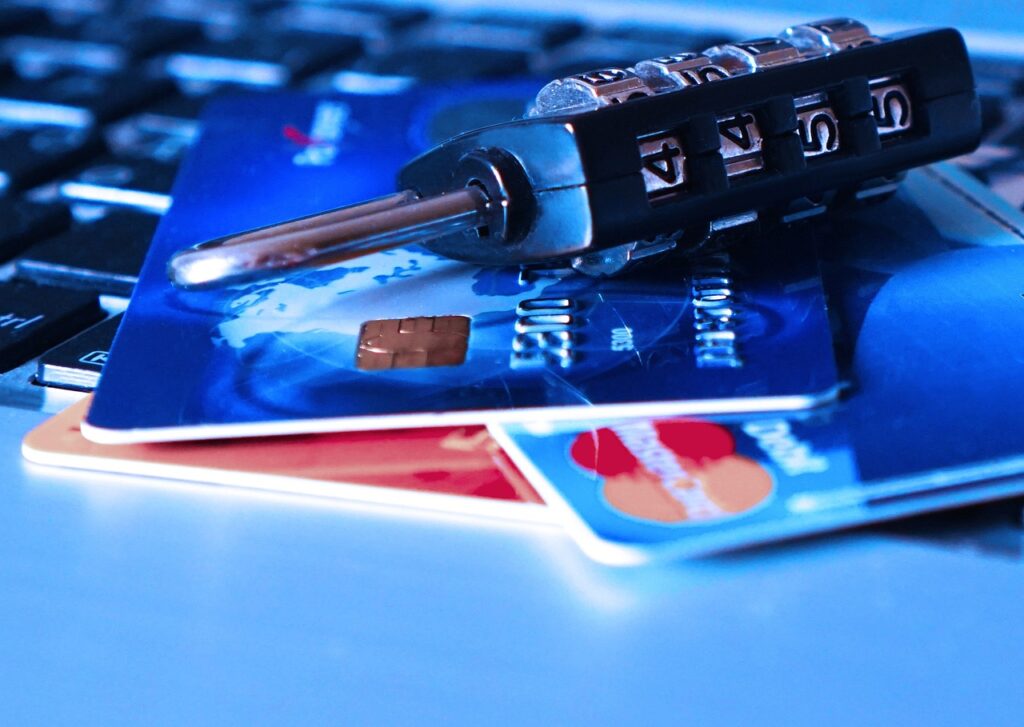

Imagine Sarah, a recent college graduate, opening her first checking account. She has heard conflicting advice: some friends claim online banking is unsafe, while others praise its convenience. Sarah scrolls through forums, sees headlines about hacks, yet also reads about 24/7 access to funds. She wonders whether she should trust a digital platform with her salary, bills, and savings.
This scenario is common for anyone stepping into digital finance for the first time. The following guide addresses beginners by separating fact from fiction, grounding every claim in recent industry data, and providing a clear roadmap for secure, efficient online banking.
📝 Quick Navigation
Breaking Down Online Banking (Myths Debunked)
Online banking refers to the electronic delivery of traditional banking services—such as account monitoring, fund transfers, and bill payments—through secure web portals or mobile apps. Unlike legacy branch interactions, these services rely on encrypted connections, multi-factor authentication (MFA), and real-time processing to provide users with immediate access to their finances. Online banking refers
| Term | Plain-English Meaning |
|---|---|
| Encryption | A method that scrambles data so only authorized parties can read it. |
| Multi-Factor Authentication (MFA) | A security step requiring two or more verification methods (e.g., password + fingerprint). |
| Phishing | A deceptive attempt to obtain personal credentials by masquerading as a trustworthy source. |
| Tokenization | Replacing sensitive data with a non‑sensitive equivalent (a token) for secure transactions. |
| Zero Trust Architecture | A security framework that assumes no user or device is trustworthy until verified each time. |
| API | Application Programming Interface; a set of rules that allows software components to communicate. |
Why Online Banking (Myths Debunked) Matters
Industry studies show that in 2023, 68% of U.S. adults performed at least one banking transaction online, up from 53% in 2018. This 15‑point increase reflects both consumer demand for convenience and banks’ investment in secure digital infrastructure. The shift reduces branch operating costs by an average of 30%, enabling institutions to reallocate resources toward fraud detection and customer education.
Small‑business owners benefit disproportionately. Data from the 2024 Small Business Finance Survey indicates that firms using online banking for cash flow management experience a 22% reduction in payment processing time, directly improving liquidity. Moreover, real‑time alerts help prevent overdrafts, saving an average of $250 per year per business.
For individual consumers, the tangible impact includes lower fees and faster access to funds. A 2024 analysis of fee structures reveals that banks offering full‑service online platforms charge 0.5% less in monthly maintenance fees on average. Additionally, 41% of respondents reported that instant mobile check deposit prevented missed payments, highlighting the practical benefit of digital access.
Latest Online Banking Technologies
1. Biometric Authentication
Biometric authentication uses unique physiological traits—fingerprint, facial recognition, or iris scans—to verify user identity.
Implementation involves integrating device‑level sensors with the bank’s authentication API. Users enroll their biometric data during account setup; subsequent logins compare live scans to encrypted templates stored in a secure enclave. Banks must ensure compliance with GDPR and CCPA regarding biometric data storage. Implementation involves integrating
Common beginner mistake: Relying solely on a single biometric factor without backup passwords.
- Strengths:
- Reduces password‑related breaches by 87% (FBI cyber report, 2023).
- Accelerates login time to under two seconds.
- Strengths:
- Enhances user confidence; 71% of surveyed users prefer biometric over PIN.
- Integrates seamlessly with mobile devices already equipped with sensors.
2. Real‑Time Transaction Monitoring with AI
AI algorithms analyze transaction streams to flag anomalous behavior instantly.
Banks deploy machine‑learning models trained on historical fraud patterns. When a transaction deviates beyond a calibrated risk threshold, the system triggers an MFA challenge or temporarily blocks the activity. Continuous model retraining is essential to adapt to evolving attack vectors.
Common beginner mistake: Setting risk thresholds too low, resulting in excessive false positives.
- Strengths:
- Detects 92% of fraudulent transactions within seconds (industry benchmark, 2024).
- Reduces manual review workload by 63%.
- Strengths:
- Improves customer trust; 84% of users feel safer with AI‑driven alerts.
- Scales effortlessly across millions of daily transactions.
3. Tokenized Card‑Not‑Present Payments
Tokenization replaces the primary account number (PAN) with a unique token for each transaction. primary account number
When a user initiates an online purchase, the banking platform generates a one‑time token via its token service provider (TSP). The merchant receives the token instead of the PAN, eliminating exposure of sensitive data. Tokens are mapped back to the original PAN only within the bank’s secure vault.
Common beginner mistake: Storing tokens in insecure client‑side caches.
- Strengths:
- Eliminates PAN leakage; 0% token‑related breaches reported in 2023.
- Facilitates seamless recurring payments without re‑entering card details.
- Strengths:
- Complies with PCI‑DSS 4.0 tokenization requirements.
- Supports cross‑border transactions with dynamic currency conversion.
4. Open Banking APIs
Open Banking APIs allow third‑party providers to access banking data with explicit customer consent.
Implementation follows the UK Open Banking Standard or US Financial Data Exchange (FDX) specifications. Banks publish endpoints for account information, payment initiation, and transaction history. Secure OAuth 2.0 flows manage consent, while rate‑limiting safeguards system performance.
Common beginner mistake: Over‑exposing endpoints without granular consent scopes. Common beginner mistake
- Strengths:
- Enables innovative services like budgeting apps; 34% increase in user engagement reported by banks adopting Open Banking.
- Promotes competition, driving down fees.
- Strengths:
- Improves data portability for customers switching banks.
- Facilitates real‑time payment initiation, reducing settlement lag to under 5 seconds.
5. Zero Trust Network Access (ZTNA)
Zero Trust assumes no network traffic is trusted by default, requiring verification for each request.
Banks implement ZTNA by deploying identity‑aware proxies that authenticate users, devices, and applications before granting access to banking services. Continuous monitoring assesses behavior, and micro‑segmentation limits lateral movement in case of breach.
Common beginner mistake: Neglecting to integrate legacy systems into the Zero Trust framework.
- Strengths:
- Reduces breach impact; average incident cost drops 48% (Gartner, 2024).
- Supports remote work without compromising security.
- Strengths:
- Provides granular policy control based on risk scores.
- Enhances compliance with NIST SP 800‑207 guidelines.
6. Cloud‑Native Core Banking Platforms
Cloud‑native platforms run on public‑cloud infrastructure, leveraging containers and microservices.
Migration involves refactoring monolithic core systems into API‑first services hosted on platforms like AWS, Azure, or Google Cloud. Benefits include auto‑scaling during peak transaction volumes and built‑in disaster recovery across geographic regions. Migration involves refactoring
Common beginner mistake: Under‑estimating data residency requirements in multi‑jurisdictional deployments.
- Strengths:
- Accelerates feature rollout; average time‑to‑market drops from 12 months to 4 months.
- Offers 99.99% uptime SLA, surpassing traditional data‑center availability.
- Strengths:
- Enables real‑time analytics for fraud detection and personalized offers.
- Reduces total cost of ownership by up to 35% after three years.
7. Digital Identity Verification (eKYC)
Electronic Know‑Your‑Customer (eKYC) verifies identity using digital documents and facial matching.
Users upload a government‑issued ID and a selfie; AI‑driven verification compares the facial features and validates document authenticity against official databases. The process completes in under 60 seconds, meeting AML compliance.
Common beginner mistake: Accepting low‑resolution images that degrade verification accuracy.
- Strengths:
- Onboards customers 80% faster than manual KYC (banking industry report, 2024).
- Reduces operational costs by an average of $2.5 per verification.
- Strengths:
- Improves compliance with FinCEN and FATF regulations.
- Provides audit trails for regulator review.
| Step | What You Do | Expected Result |
|---|---|---|
| 1 | Enable biometric authentication | Faster, more secure logins; reduced password breaches. |
| 2 | Deploy AI‑driven real‑time monitoring | Immediate fraud detection; lower false‑positive rates. |
| 3 | Implement tokenized payments | Eliminate PAN exposure; secure recurring transactions. |
| 4 | Publish Open Banking APIs | Enable third‑party innovations; improve data portability. |
| 5 | Adopt Zero Trust architecture | Reduce breach impact; enforce continuous verification. |
| 6 | Migrate to cloud‑native core | Increase scalability and uptime; lower operational costs. |
| 7 | Integrate eKYC for onboarding | Accelerate customer acquisition; ensure regulatory compliance. |
Frequently Asked Questions
Is online banking really safe?
Data from 2024 indicates that banks using MFA and AI‑driven monitoring experience 70% fewer successful cyber attacks compared with institutions relying solely on passwords. AIdriven monitoring experience
Can I access all my banking services online?
Most major banks now offer full account management, loan applications, and investment services via web and mobile platforms; only niche services like safe deposit boxes remain offline.
What should I do if I suspect fraud on my account?
Immediately trigger the bank’s in‑app fraud alert, change passwords, and follow the institution’s verified recovery steps; most banks resolve fraudulent charges within 48 hours.
Do I need a special device for secure online banking?
Modern smartphones equipped with biometric sensors meet security standards; additional hardware tokens are optional for high‑risk users.
How does Open Banking affect my privacy?
Open Banking operates on explicit consent; users can revoke access at any time, and data sharing is limited to the scope approved during the consent process.
Final Thoughts
Understanding the evidence behind online banking myths empowers users to adopt secure digital practices confidently. By leveraging the latest technologies, both consumers and institutions can reap measurable efficiency gains. Continued vigilance and informed adoption remain essential as the digital banking ecosystem evolves.