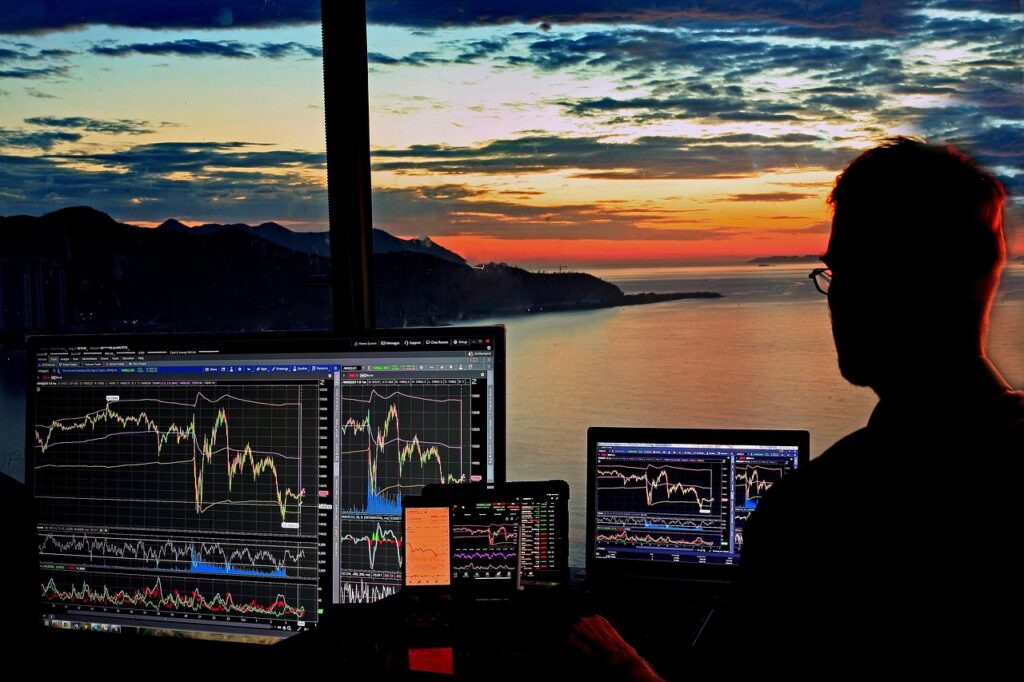

New investors in the financial market often stumble upon the term AI trading and wonder what it entails and how it can benefit their investment strategies. As a novice investor, understanding AI trading can seem daunting, but it’s an essential tool for anyone looking to navigate the complex world of finance. With the rapid advancement in technology, AI trading has gained significant attention in recent years. Here’s the key thing to understand: AI trading is not just a trend, but a revolutionary approach that’s transforming the financial industry. As the financial market continues to evolve, it’s crucial for investors to stay ahead of the curve and explore the potential of AI trading.
📝 Quick Navigation
The Basics of AI Trading
AI trading, also known as artificial intelligence trading, refers to the use of computer programs that utilize artificial intelligence and machine learning algorithms to analyze market data and make predictions about future market trends. These programs can process vast amounts of data, identify patterns, and make trading decisions at a speed and accuracy that human traders cannot match. Most people miss this: AI trading is not just about automating trades, but also about providing investors with valuable insights and data-driven recommendations.
| Term | Plain-English Meaning |
|---|---|
| Machine Learning | A type of artificial intelligence that enables computers to learn from data without being explicitly programmed. |
| Natural Language Processing | A subset of artificial intelligence that deals with the interaction between computers and humans in natural language. |
| Algorithmic Trading | A method of trading that uses pre-programmed instructions to automatically execute trades. |
| Big Data | Large amounts of structured and unstructured data that can be analyzed to gain insights and make informed decisions. |
| Cloud Computing | A model of delivering computing services over the internet, providing on-demand access to a shared pool of resources. |
| Predictive Analytics | A type of advanced analytics that uses statistical models and machine learning algorithms to forecast future events or behaviors. |
Why AI Trading Matters
AI trading has the potential to benefit a wide range of individuals and organizations, from professional traders and investors to financial institutions and corporations. By utilizing AI trading, investors can gain access to real-time market data, analyze trends, and make informed trading decisions. For instance, a study by a leading financial institution found that AI-powered trading systems can generate returns of up to 20% per annum, outperforming traditional trading methods. Moreover, AI trading can help reduce the risk of human error, which is estimated to account for up to 80% of trading losses.
Real-world examples of AI trading in action include the use of chatbots to provide customer support and trading recommendations to clients. Additionally, AI-powered trading platforms can analyze large amounts of market data, identify patterns, and execute trades at a speed and accuracy that human traders cannot match. According to a report by a leading market research firm, the global AI trading market is projected to reach $1.4 billion by 2025, growing at a compound annual growth rate of 35.4%.
Most people are unaware that AI trading is not just limited to the financial industry. It has far-reaching implications for various sectors, including healthcare, e-commerce, and cybersecurity. For example, AI-powered trading systems can be used to predict patient outcomes, optimize supply chain management, and detect potential security threats. As the technology continues to evolve, it’s likely that AI trading will become an essential tool for businesses and organizations across the globe.
Major AI Trading Developments
-
Development of Machine Learning Algorithms
The development of machine learning algorithms is a crucial component of AI trading. These algorithms enable computers to learn from data, identify patterns, and make predictions about future market trends. To develop machine learning algorithms, traders need to have a solid understanding of programming languages such as Python and R. They also need to have access to large amounts of historical market data, which can be used to train and test the algorithms. A common beginner mistake is to overfit the algorithms to the training data, resulting in poor performance on new, unseen data. machine learning algorithms
- Strengths: learn how this works
- Ability to analyze large amounts of data
- Ability to identify complex patterns and relationships
- Strengths: learn how this works
-
Integration of Natural Language Processing
The integration of natural language processing (NLP) is another significant development in AI trading. NLP enables computers to understand and interpret human language, which can be used to analyze financial news and social media sentiment. To integrate NLP into AI trading systems, traders need to have a solid understanding of NLP techniques such as text preprocessing and sentiment analysis. They also need to have access to large amounts of text data, which can be used to train and test the NLP models. A common beginner mistake is to underestimate the complexity of human language, resulting in poor performance of the NLP models.
- Strengths:
- Ability to analyze financial news and social media sentiment
- Ability to identify trends and patterns in human language
- Strengths:
-
Use of Big Data and Cloud Computing
The use of big data and cloud computing is a critical component of AI trading. Big data provides the raw material for machine learning algorithms, while cloud computing provides the infrastructure to process and analyze the data. To use big data and cloud computing, traders need to have a solid understanding of data storage and processing technologies such as Hadoop and Spark. They also need to have access to cloud-based infrastructure such as Amazon Web Services (AWS) or Microsoft Azure. A common beginner mistake is to underestimate the cost and complexity of big data and cloud computing, resulting in poor performance and high costs.
- Strengths:
- Ability to process and analyze large amounts of data
- Ability to scale up or down to meet changing demands
- Strengths:
-
Development of Predictive Analytics
The development of predictive analytics is a significant development in AI trading. Predictive analytics enables traders to forecast future market trends and make informed trading decisions. To develop predictive analytics, traders need to have a solid understanding of statistical models and machine learning algorithms. They also need to have access to large amounts of historical market data, which can be used to train and test the predictive models. A common beginner mistake is to over-rely on historical data, resulting in poor performance in changing market conditions. trading Predictive analytics
- Strengths: discover more
- Ability to forecast future market trends
- Ability to identify potential risks and opportunities
- Strengths: discover more
-
Use of Chatbots and Virtual Assistants
The use of chatbots and virtual assistants is a significant development in AI trading. Chatbots and virtual assistants can provide customer support, trading recommendations, and market analysis to traders. To use chatbots and virtual assistants, traders need to have a solid understanding of NLP and machine learning algorithms. They also need to have access to large amounts of text data, which can be used to train and test the chatbots and virtual assistants. A common beginner mistake is to underestimate the complexity of human language, resulting in poor performance of the chatbots and virtual assistants.
- Strengths:
- Ability to provide customer support and trading recommendations
- Ability to analyze market trends and provide insights
- Strengths:
-
Development of Automated Trading Systems
The development of automated trading systems is a critical component of AI trading. Automated trading systems can execute trades at a speed and accuracy that human traders cannot match. To develop automated trading systems, traders need to have a solid understanding of programming languages such as Python and R. They also need to have access to large amounts of historical market data, which can be used to train and test the automated trading systems. A common beginner mistake is to overfit the automated trading systems to the training data, resulting in poor performance on new, unseen data.
- Strengths:
- Ability to execute trades at high speed and accuracy
- Ability to reduce the risk of human error
- Strengths:
-
Integration of Blockchain Technology
The integration of blockchain technology is a significant development in AI trading. Blockchain technology provides a secure and transparent way to record and verify transactions. To integrate blockchain technology into AI trading systems, traders need to have a solid understanding of blockchain architecture and smart contracts. They also need to have access to blockchain-based infrastructure such as Ethereum or Bitcoin. A common beginner mistake is to underestimate the complexity of blockchain technology, resulting in poor performance and security risks.
- Strengths: get more information
- Ability to provide a secure and transparent way to record and verify transactions
- Ability to reduce the risk of fraud and manipulation
- Strengths: get more information
| Step | What You Do | Expected Result |
|---|---|---|
| 1. Develop Machine Learning Algorithms | Develop and train machine learning algorithms using historical market data | Improved trading performance and reduced risk |
| 2. Integrate Natural Language Processing | Integrate NLP into AI trading systems to analyze financial news and social media sentiment | Improved market analysis and sentiment analysis |
| 3. Use Big Data and Cloud Computing | Use big data and cloud computing to process and analyze large amounts of market data | Improved trading performance and reduced costs |
| 4. Develop Predictive Analytics | Develop predictive analytics to forecast future market trends | Improved trading performance and reduced risk |
| 5. Use Chatbots and Virtual Assistants | Use chatbots and virtual assistants to provide customer support and trading recommendations | Improved customer support and trading performance |
| 6. Develop Automated Trading Systems | Develop automated trading systems to execute trades at high speed and accuracy | Improved trading performance and reduced risk |
| 7. Integrate Blockchain Technology | Integrate blockchain technology to provide a secure and transparent way to record and verify transactions | Improved security and transparency |
Frequently Asked Questions
What is AI Trading?
AI trading refers to the use of artificial intelligence and machine learning algorithms to analyze market data and make predictions about future market trends. It’s a revolutionary approach that’s transforming the financial industry by providing investors with accurate and data-driven insights to make informed trading decisions.
How Does AI Trading Work?
AI trading works by using machine learning algorithms to analyze large amounts of market data, identify patterns, and make predictions about future market trends. The algorithms can be trained using historical market data and can be integrated with other technologies such as natural language processing and blockchain technology. using machine learning
What are the Benefits of AI Trading?
The benefits of AI trading include improved trading performance, reduced risk, and increased efficiency. AI trading can also provide investors with real-time market data, analyze trends, and make informed trading decisions. Additionally, AI trading can help reduce the risk of human error, which is estimated to account for up to 80% of trading losses. trading include improved
Is AI Trading Suitable for Beginners?
AI trading can be suitable for beginners, but it’s essential to have a solid understanding of the technology and the markets. Beginners should start by learning the basics of AI trading, including machine learning algorithms, natural language processing, and blockchain technology. They should also practice using AI trading systems and seek guidance from experienced traders and investors.
What are the Risks of AI Trading?
The risks of AI trading include the risk of overfitting, which can result in poor performance on new, unseen data. There’s also the risk of underestimating the complexity of human language, which can result in poor performance of chatbots and virtual assistants. Additionally, AI trading systems can be vulnerable to security risks, such as hacking and data breaches.
One Last Thing
AI trading is a rapidly evolving field, and it’s essential for investors to stay ahead of the curve. By understanding the basics of AI trading, including machine learning algorithms, natural language processing, and blockchain technology, investors can gain a competitive edge in the markets. With the potential to improve trading performance, reduce risk, and increase efficiency, AI trading is an essential tool for anyone looking to succeed in the financial industry. As the technology continues to advance, it’s likely that AI trading will become an indispensable part of any investment strategy.