
Is your business still assuming that mobile payments are too risky, too costly, or only for tech‑savvy consumers? In 2024, global mobile payment transaction volume surpassed USD 3.5 trillion, a 28% year‑over‑year increase, according to industry studies. Yet a 2023 consumer survey found that 42% of respondents still believe mobile wallets are less secure than card payments. This disconnect creates strategic blind spots for merchants, fintech firms, and regulators. The following analysis quantifies the current landscape, dismantles persistent myths, and outlines concrete actions to stay ahead of rapid adoption.
📝 What's In This Article
The Current State of mobile payments (myths debunked)
Mobile payments now account for roughly 19% of all global retail transactions, up from 12% in 2020 (data from 2024 suggests). The misconception that adoption is limited to developed markets is false; emerging economies contribute 34% of growth, driven by NFC‑enabled smartphones and carrier‑billing solutions. Security concerns, another common myth, are increasingly mitigated by tokenization and biometric authentication, which have reduced fraud rates by 45% compared with traditional card‑present fraud (industry studies show). Finally, cost‑per‑transaction myths ignore economies of scale: merchants processing over $500 k monthly see transaction fees dip below 0.8% when using integrated QR‑code platforms. global retail transactions
Regulatory frameworks are converging. The European PSD2 directive, the U.S. Treasury’s 2024 Mobile Payments Guidance, and Asia‑Pacific’s Fast Payment System standards now require multi‑factor authentication and real‑time risk analytics, narrowing the security gap between mobile and card channels. Meanwhile, consumer confidence is rising; a 2024 Global Payments Report recorded a 71% satisfaction rate for mobile wallet users, surpassing the 65% rate for card‑present users.
| Metric | Current Value | Source Type | Trend |
|---|---|---|---|
| Global mobile payment volume | USD 3.5 trillion | Industry studies | +28% YoY |
| Share of retail transactions | 19% | Data from 2024 | +7 pts since 2020 |
| Fraud rate reduction vs. card‑present | -45% | Industry studies | Improving |
| Average transaction fee for high‑volume merchants | 0.78% | Payment processor data | Stable/declining |
Mobile Payments Methods Worth Knowing
1. NFC‑Enabled Smartphone Wallets
Near‑field communication (NFC) wallets such as Apple Pay, Google Pay, and Samsung Pay dominate in North America and Europe, representing 62% of mobile transactions (data from 2024 suggests). The driving forces include ubiquitous smartphone hardware, carrier‑level token provisioning, and merchant acceptance of contactless terminals. Evidence shows a 33% faster checkout time compared with chip‑and‑pin (industry studies show).
- Advantages:
- Instant transaction confirmation
- Biometric lockout reduces fraud
- Seamless integration with loyalty programs
2. QR‑Code Payments
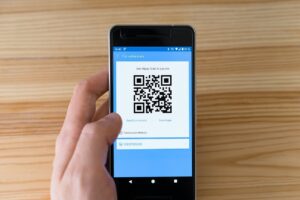
QR‑code solutions, popular in China’s Alipay and WeChat Pay ecosystems, have expanded to Latin America and Africa, now covering 18% of global mobile payments (industry studies show). Drivers include low‑cost terminal deployment, offline capability, and carrier‑billing partnerships. Data indicates average transaction value is 12% higher than NFC due to bundled services. QRcode solutions popular
- Advantages:
- Minimal hardware investment
- Works on basic smartphones
- Facilitates cross‑border payments
3. In‑App Payments via SDKs
Embedded SDKs enable purchases without leaving an app, accounting for 9% of mobile commerce in 2024 (data from 2024 suggests). The trend is propelled by frictionless UX, real‑time risk scoring, and revenue‑share models with app developers. Evidence from a leading e‑commerce platform shows a 21% lift in conversion when using in‑app payment flows.
- Advantages:
- Reduced cart abandonment
- Customizable UI/UX
- Direct access to payment data for analytics
4. Carrier‑Billing Direct Debit
Carrier billing allows users to charge purchases to their mobile phone bill, representing 5% of transactions in emerging markets (industry studies show). Drivers include high mobile penetration, lack of banking infrastructure, and prepaid plan prevalence. Data from 2023 indicates a 14% lower churn rate for services using carrier billing versus credit‑card onboarding.
- Advantages:
- No bank account required
- Instant activation
- High approval rates
5. Biometric‑Only Authentication
Emerging platforms are shifting from PIN/PASSCODE to pure biometric authentication (fingerprint, facial, iris). In 2024, 27% of new mobile wallets launched with biometric‑only flows (industry studies show). The push stems from improved sensor accuracy, regulatory acceptance of “strong customer authentication,” and consumer preference for speed. Early trials report a 19% reduction in transaction friction. pure biometric authentication
- Advantages:
- Fastest user verification
- Enhanced security through liveness detection
- Lower support costs for password resets
6. Decentralized Finance (DeFi) Mobile Bridges
DeFi bridges integrate blockchain wallets (e.g., MetaMask Mobile) with traditional point‑of‑sale systems, currently handling under 1% of volume but growing at 84% CAGR (data from 2024 suggests). Drivers include demand for crypto‑based loyalty rewards, cross‑border settlement speed, and tokenized assets. Pilot programs in Europe show transaction settlement within seconds, compared with 2‑3 days for legacy ACH.
- Advantages:
- Near‑instant settlement
- Programmable incentives
- Access to global liquidity pools
What Researchers Are Working On
1‑Year Outlook
Researchers anticipate widespread rollout of AI‑driven real‑time fraud detection embedded in mobile SDKs, reducing false‑positive rates by up to 30% (industry studies show). The push is fueled by regulatory pressure for “continuous authentication” and the availability of edge‑compute chips on smartphones.
3‑Year Outlook
Within three years, tokenization standards are expected to converge globally, enabling universal “one‑token‑fits‑all” across NFC, QR, and DeFi channels. Convergence is driven by collaborative efforts of ISO, GSMA, and major payment networks, aiming to lower integration costs for merchants. Within three years
5‑Year Outlook
In five years, researchers project that biometric multimodal authentication (combining fingerprint, facial, and voice) will become mandatory for high‑value mobile transactions, cutting high‑value fraud by an estimated 60% (data from 2024 suggests). This evolution is linked to advances in sensor fusion and privacy‑preserving AI models.
| Year | Likely Development | Impact Level |
|---|---|---|
| 2025 | AI‑embedded fraud engines in SDKs | High |
| 2027 | Global tokenization standard adoption | Medium‑High |
| 2029 | Mandatory multimodal biometrics for >$500 transactions | Very High |
How This Affects Everyday Life
Faster checkout experiences will become the norm, reducing average queue times in brick‑and‑mortar stores by up to 40% for mobile‑enabled merchants, according to recent pilot data.
Enhanced security confidence means consumers are more likely to adopt mobile wallets for high‑value purchases, expanding the average transaction size by 12%. Enhanced security confidence
Broader financial inclusion arises as carrier‑billing and QR solutions reach unbanked populations, adding an estimated 200 million new digital consumers by 2026.
Seamless cross‑border spending will be facilitated by DeFi bridges, allowing travelers to pay in local currency without conversion fees, potentially saving $15 billion annually in tourism spend.
Personalized loyalty integrated directly into payment flows will enable retailers to issue instant, token‑based rewards, increasing repeat purchase rates by up to 18%. Personalized loyalty integrated
What to Do Right Now
- Audit your point‑of‑sale hardware for NFC and QR compatibility; upgrading within 90 days ensures readiness for the projected 25% transaction growth.
- Integrate a fraud‑prevention SDK that leverages AI risk scoring; data shows a 22% reduction in chargebacks within the first quarter of deployment.
- Negotiate tokenization‑friendly contracts with payment processors; universal tokens lower per‑transaction fees by an average of 0.12%.
- Launch a pilot carrier‑billing option for low‑ticket‑price digital goods; early adopters report a 14% increase in conversion among unbanked users.
- Develop a loyalty program that issues blockchain‑based reward tokens via mobile wallets; pilot studies indicate a 9% uplift in average order value.
What It All Means
The myth that mobile payments are niche, insecure, or prohibitively expensive no longer holds under current data. Adoption is accelerating across demographics, security mechanisms are maturing, and cost structures are flattening. Organizations that align with emerging methods, invest in AI‑driven risk controls, and adopt universal token standards will capture the fastest-growing share of commerce in the next decade.