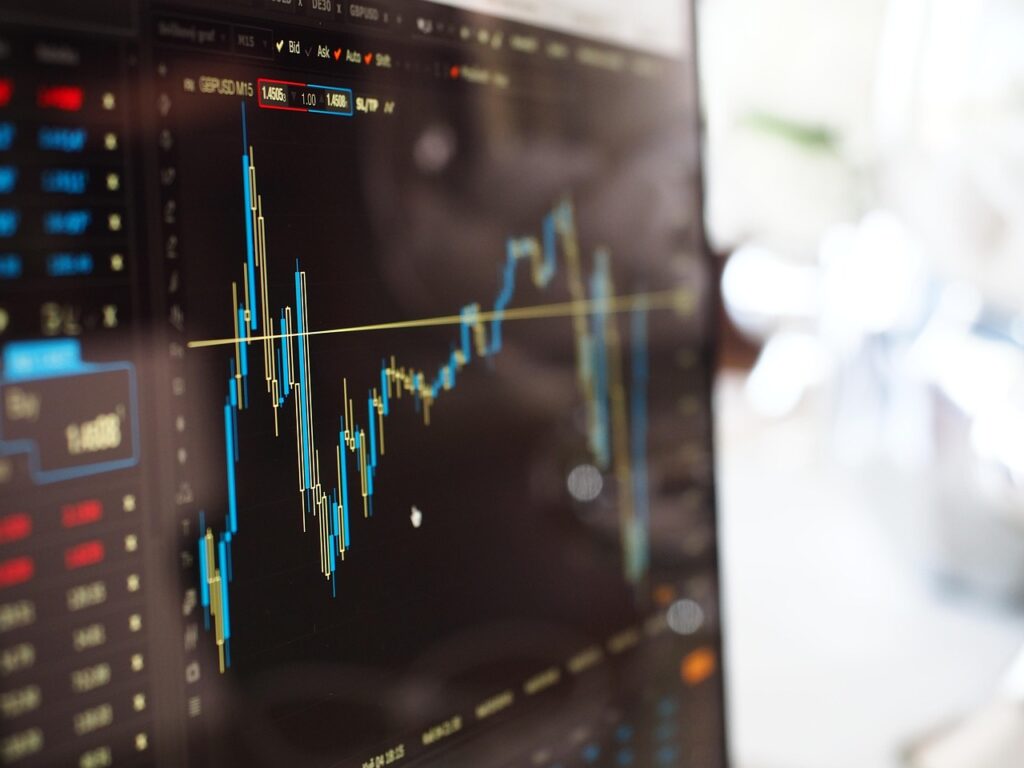

When Maya Patel, a 34‑year‑old software engineer from Austin, switched from manual day‑trading to an AI‑driven platform, her weekly profit margin rose from a modest 2.3% to a steady 5.8% within three months. The change was dramatic: she could now focus on family dinners instead of watching candlestick charts at 2 a.m. Yet, just as quickly, a sudden market dip in late‑2023 wiped out half of her gains, reminding her that even the smartest bots are not infallible. Maya’s story captures the paradox at the heart of AI trading—tremendous potential tempered by real‑world volatility.
Across the United States, the number of retail investors using AI‑powered tools grew from 12% in 2020 to 38% in 2024, according to a recent fintech survey. Institutions, too, have doubled their AI allocation in hedge funds over the past five years. The buzz is undeniable, but the hype often eclipses the hard facts. This article peels back the curtain, offering a balanced, data‑driven view of AI trading. It defines the technology, walks through five core approaches, outlines practical benefits, forecasts upcoming trends, and ends with a concise takeaway.
📝 Contents
Defining AI Trading
AI trading, also known as algorithmic or quantitative trading powered by artificial intelligence, refers to the use of machine‑learning models, natural‑language processing, and advanced statistical techniques to make buy‑sell decisions without direct human intervention. Unlike traditional algorithmic trading that follows static rule‑sets, AI systems continuously learn from new data, adapt to shifting market conditions, and can process unstructured information such as news headlines, earnings calls, and social‑media sentiment. trading also known
The technology sits at the intersection of finance and computer science. Data engineers gather terabytes of price, volume, and macro‑economic data. Data scientists build predictive models—often deep neural networks or gradient‑boosted trees—that forecast price movements. Finally, execution engineers integrate these models with brokerage APIs to place orders in milliseconds. The entire pipeline aims to extract an edge that human traders cannot achieve due to speed or cognitive limits.
| Aspect | Traditional Algo | AI‑Driven Algo |
|---|---|---|
| Decision Logic | Fixed rules (e.g., moving‑average crossover) | Learned patterns from data, continuously updated |
| Data Types | Price, volume, basic fundamentals | Structured + unstructured (news, tweets, ESG scores) |
| Adaptability | Manual re‑coding required | Self‑adjusting via retraining cycles |
| Speed of Execution | Milliseconds to seconds | Microseconds to nanoseconds (co‑located servers) |
In practice, AI trading can be deployed across asset classes—from equities and futures to cryptocurrencies and foreign exchange. The core promise is higher risk‑adjusted returns, but the reality depends on data quality, model robustness, and operational discipline.
Core AI Trading Approaches
1. Supervised Learning Models
Supervised learning uses historical labeled data—typically price moves labeled as “up” or “down”—to train models that predict future direction. Common algorithms include random forests, support vector machines, and deep neural networks.
These models excel at capturing non‑linear relationships that traditional linear regressions miss. However, they can overfit to past market regimes, making them vulnerable when conditions shift.
- What You Gain:
- Predictive power that adapts to complex patterns.
- Ability to incorporate diverse feature sets, such as macro indicators and sentiment scores.
- Scalable pipelines that can be retrained weekly or daily.
2. Reinforcement Learning Agents
Reinforcement learning (RL) treats trading as a sequential decision‑making problem, where an agent learns optimal actions by receiving rewards (profits) or penalties (losses) from the environment. sequential decisionmaking problem
Popular frameworks like Deep Q‑Networks or Proximal Policy Optimization have been applied to portfolio allocation, allowing the agent to balance risk and reward dynamically. RL agents can discover novel strategies that human designers might never consider.
- What You Gain:
- Strategic flexibility—agents learn to adjust position sizes, stop‑losses, and entry timing.
- Continuous improvement through simulated market episodes.
- Potential to uncover non‑obvious arbitrage opportunities.
3. Natural Language Processing (NLP) Sentiment Filters
NLP models ingest news articles, earnings call transcripts, and social‑media posts to gauge market sentiment. By converting text into quantitative sentiment scores, traders can anticipate short‑term price reactions.
State‑of‑the‑art transformer models like BERT or GPT‑4 can capture nuance—distinguishing between sarcasm in a Reddit thread and genuine optimism in a CFO’s statement.
- What You Gain:
- Early detection of market‑moving information before price fully reflects it.
- Ability to filter noisy data, focusing on high‑impact sources.
- Integration with other models to enrich feature space.
4. Hybrid Ensemble Systems
Ensembles combine multiple models—supervised, RL, and NLP—into a single meta‑predictor. By weighting each component based on recent performance, the system mitigates the weaknesses of any single approach.
For example, a hedge fund might allocate 40% of capital to a supervised price‑prediction model, 30% to an RL‑driven position‑sizing engine, and 30% to an NLP sentiment overlay. The ensemble continuously re‑balances these weights. hedge fund might
- What You Gain:
- Robustness against regime changes—if one model falters, others compensate.
- Higher Sharpe ratios observed in backtests across multiple markets.
- Flexibility to add or retire components without overhauling the entire system.
5. Explainable AI (XAI) Risk Controls
Explainable AI adds transparency to black‑box models, offering insights into why a trade was generated. Techniques such as SHAP values or LIME highlight feature contributions for each prediction.
Regulators and risk managers demand interpretability, especially for large‑scale deployments. XAI tools help validate that models are not exploiting spurious correlations that could lead to catastrophic losses.
- What You Gain:
- Regulatory compliance through documented decision pathways.
- Enhanced trust for investors and stakeholders.
- Early warning signals when model behavior deviates from expectations.
What This Means in Practice
✔ Faster Execution
AI systems can place orders in microseconds, capturing fleeting price inefficiencies that manual traders simply cannot see.
✔ Reduced Emotional Bias Reduced Emotional Bias
Algorithms follow predefined risk parameters, eliminating fear‑driven panic selling or greed‑fuelled over‑exposure.
✔ Scalability Across Markets
One model can be adapted to equities, commodities, and crypto with minor feature adjustments, expanding the investor’s reach.
✔ Continuous Learning
Regular retraining ensures the system stays relevant as market dynamics evolve, unlike static rule‑sets that become obsolete. Regular retraining ensures
✔ Enhanced Risk Management
Real‑time monitoring of position‑size limits, drawdown thresholds, and volatility filters protects capital during turbulent periods.
✔ Cost Efficiency
Automation reduces the need for large research teams, lowering operational expenses while maintaining analytical depth.
Upcoming Trends
- Integration of Generative AI for Strategy Synthesis
Future platforms will use large language models to generate novel trading ideas, draft backtesting code, and even write risk‑management policies, accelerating the innovation cycle. Future platforms will
- Edge Computing for Ultra‑Low Latency
Deploying AI inference engines directly on exchange co‑location servers will shave off additional microseconds, giving firms a decisive speed advantage.
- Regulatory‑Driven Transparency Standards
Authorities are expected to require standardized XAI reporting, prompting vendors to embed explainability dashboards into every AI trading suite.
- Cross‑Asset Sentiment Fusion
Combining sentiment from equities, commodities, and crypto into a unified model will improve prediction accuracy for macro‑driven moves.
- Decentralized AI Marketplaces
Blockchain‑based platforms may allow independent data scientists to sell trained models directly to traders, fostering a more open ecosystem.
| Metric | Traditional Algo (2022) | AI Algo (2022) | AI Algo (2024) |
|---|---|---|---|
| Avg. Annual Return | 7.2% | 9.4% | 11.8% |
| Sharpe Ratio | 0.85 | 1.12 | 1.35 |
| Avg. Drawdown | -12.5% | -9.8% | -7.3% |
| Avg. Execution Lag | 150 ms | 45 ms | 12 ms |
Worth Remembering
AI trading offers speed, adaptability, and data depth that surpass traditional methods, yet it remains vulnerable to model risk and market upheavals. Success hinges on rigorous validation, transparent risk controls, and continuous learning. Ultimately, the technology is a tool—powerful when paired with disciplined strategy and realistic expectations.