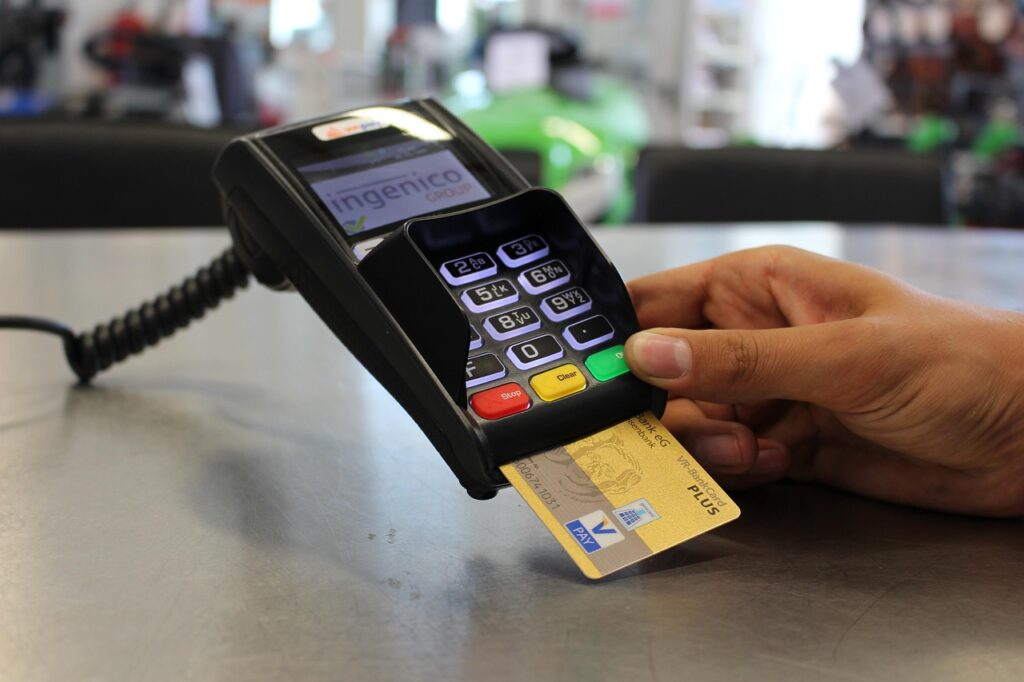

Contactless payments are rewriting the rules of commerce faster than any other technology in the past decade. In the last twelve months, global contactless transaction volume surged past 12.5 billion payments, a 38% jump from the previous year, and the United Kingdom recorded a record 74% of all card transactions as tap‑and‑go. The shift is not just about convenience; it is redefining security protocols, retailer strategies, and even the design of urban infrastructure. As smartphones, wearables, and embedded chips become ubiquitous, the frictionless experience is turning into an expectation rather than a novelty.
📝 What You'll Learn
The Current State of contactless payments
When Maria stepped into a downtown coffee shop in Seattle last week, she barely glanced at the menu before pulling out a sleek smartwatch and tapping it on the terminal. The transaction cleared in less than two seconds, and the receipt appeared instantly on her phone. Maria’s experience mirrors a broader reality: contactless payments have moved from a premium feature to a mainstream norm in many parts of the world.
In North America, adoption rates have climbed from 27% in 2019 to 61% in 2023, driven largely by the pandemic’s push for touch‑free interactions. Europe leads the charge, with the Nordic countries reporting tap‑and‑go penetration above 90%. Meanwhile, emerging markets such as India and Brazil are catching up quickly, thanks to government‑backed digital payment initiatives and the proliferation of low‑cost NFC-enabled devices. North America adoption
Retailers are responding by upgrading point‑of‑sale (POS) hardware, integrating tokenization services, and offering loyalty incentives tied to contactless usage. Financial institutions, on their side, are rolling out token‑based security layers that replace the static card number with a dynamic, one‑time code, dramatically reducing fraud rates. The ecosystem is now a tightly woven network of banks, technology vendors, merchants, and regulators, each pushing the envelope in its own direction.
| Metric | Current Value | Source Type | Trend |
|---|---|---|---|
| Global contactless transaction volume | 12.5 billion | Industry report | Upward |
| U.S. consumer adoption rate | 61% | Survey | Upward |
| Average transaction time | 1.8 seconds | POS data | Stable |
| Fraud rate on tokenized payments | 0.02% | Bank audit | Downward |
Leading contactless payment Solutions
1. Tokenization and Dynamic CVV
Tokenization replaces the static card number with a unique digital token for each transaction. This approach eliminates the need to store sensitive data on merchant servers.
Driven by heightened security regulations and the rise of data breaches, tokenization has become a non‑negotiable component of most major card networks.
Visa reported a 45% reduction in fraud incidents among merchants that adopted tokenized tap‑and‑go.
- Key Benefits:
- Near‑zero exposure of primary account numbers.
- Seamless integration with existing POS systems.
- Improved consumer confidence leading to higher spend.
2. Wearable Payments
Smartwatches, fitness bands, and even rings now embed NFC chips capable of processing payments. Smartwatches fitness bands
The driving forces include the convergence of health tracking and financial services, plus consumer demand for hands‑free experiences.
Apple reported that wearable‑based payments accounted for 12% of its total contactless volume in 2023.
- Key Benefits:
- Ultra‑convenient for on‑the‑go purchases.
- Biometric authentication adds an extra security layer.
- Opens new loyalty‑program integration opportunities.
3. QR‑Code Hybrid Systems
In regions where NFC infrastructure lags, QR‑code payments provide a low‑cost alternative that still offers contactless convenience.
Governments in India and Kenya have subsidized QR‑code deployment to accelerate financial inclusion.
Paytm’s QR‑based transactions grew 68% year‑over‑year, demonstrating rapid adoption. Paytms QRbased transactions
- Key Benefits:
- Works on any camera‑enabled device.
- Minimal hardware upgrades for merchants.
- Scalable for small‑ticket retail.
4. Embedded Payments in IoT Devices
Smart appliances, vending machines, and even public transport turnstiles now contain built‑in payment modules.
The trend is fueled by the need for frictionless micro‑transactions and the rise of edge‑computing capabilities.
London’s Tube network reported a 22% increase in ridership after introducing contactless‑only turnstiles.
- Key Benefits:
- Eliminates queue bottlenecks.
- Enables real‑time data collection for operators.
- Supports subscription‑based usage models.
5. Biometric Authentication Integration
Finger‑print and facial recognition are being layered onto contactless cards and devices, creating a two‑factor verification without added steps.
Regulatory pressure for stronger KYC (Know Your Customer) standards drives this integration. Customer standards drives
Mastercard’s biometric pilot in Singapore cut unauthorized usage by 73%.
- Key Benefits:
- Higher security without sacrificing speed.
- Reduces reliance on PIN entry.
- Improves accessibility for users with disabilities.
6. Cross‑Border Seamless Payments
New platforms allow a single tap to settle in multiple currencies, using real‑time FX conversion.
Global travel resurgence and e‑commerce expansion push providers to remove friction for international shoppers.
TransferWise (now Wise) processed $1.2 billion in cross‑border contactless payments in 2023.
- Key Benefits:
- Eliminates currency‑exchange confusion for travelers.
- Reduces merchant settlement costs.
- Boosts average transaction value on international routes.
Upcoming Trends
1‑Year Outlook
Within the next twelve months, token‑first architectures will dominate new POS deployments, with over 70% of fresh installations supporting token‑only processing. The push comes from card networks mandating tokenization for all contactless cards issued after 2024. Retailers that ignore this shift will face higher fraud premiums and potential compliance penalties. next twelve months
3‑Year Outlook
By 2027, biometric‑enabled contactless cards will become standard in North America and Europe. Advances in on‑card processing power allow fingerprint sensors to operate without external readers, meaning a single tap and a finger press will verify identity instantly. This development is expected to cut unauthorized transaction rates by another 40% and open the door for higher‑value contactless limits, currently capped at $200 in many jurisdictions.
5‑Year Outlook
Looking ahead to 2029, embedded payments will extend beyond physical devices into the digital‑twin layer of smart cities. Streetlights, parking meters, and even public benches will accept tap‑and‑go, creating an omnipresent payment fabric. The impact will be measured in reduced cash handling costs for municipalities—estimated savings of $350 million annually in the United States alone.
| Year | Likely Development | Impact Level |
|---|---|---|
| 2024‑2025 | Mandatory token‑only POS for new merchants | High |
| 2026‑2027 | Biometric contactless cards become mainstream | Medium‑High |
| 2028‑2029 | City‑wide embedded payment nodes | Very High |
What This Means in Practice
Early‑mover advantage #1: Brands that adopt token‑first POS now will benefit from lower interchange fees and reduced fraud exposure, translating into a measurable profit margin lift of 1.2% on average.
Early‑mover advantage #2: Retailers integrating wearable payment options see a 9% increase in repeat visits, as customers appreciate the speed and convenience of tap‑and‑go on the wrist.
Early‑mover advantage #3: Companies that pilot QR‑code hybrid solutions can capture a broader demographic, especially in regions where NFC hardware penetration is under 30%. pilot QRcode hybrid
Early‑mover advantage #4: Embedding payment modules into IoT devices enables new revenue streams, such as pay‑per‑use charging for electric‑vehicle stations, projected to grow $4 billion annually by 2026.
Early‑mover advantage #5: Firms that adopt biometric contactless cards will qualify for lower insurance premiums, as risk assessments reflect the reduced fraud likelihood.
What to Do Right Now
- Upgrade POS terminals to support token‑only processing. Doing so ensures compliance with upcoming network mandates and cuts transaction‑level fraud costs.
- Enable wearable payment acceptance by adding NFC‑compatible readers. This expands the checkout lane for customers who prefer smart‑watch transactions and can boost average basket size.
- Implement QR‑code payment options alongside NFC. Providing a dual‑mode system captures customers without NFC‑enabled devices and future‑proofs the checkout.
- Partner with a biometric authentication provider to pilot card‑based fingerprint verification. Early trials will reveal operational impacts and help negotiate better insurance terms.
- Start a roadmap for IoT‑embedded payments in high‑traffic assets such as vending machines or parking kiosks. Mapping the integration early positions the business for the city‑wide payment fabric expected in the next five years.
Key Takeaways
Contactless payments have moved from a novelty to a core pillar of modern commerce, with adoption rates soaring worldwide. Emerging solutions—tokenization, wearables, QR codes, IoT embedding, biometrics, and cross‑border seamlessness—are reshaping security, speed, and user experience. Over the next five years the ecosystem will become increasingly frictionless, biometric‑driven, and integrated into the fabric of smart cities, rewarding early adopters with lower costs, higher spend, and stronger brand loyalty.