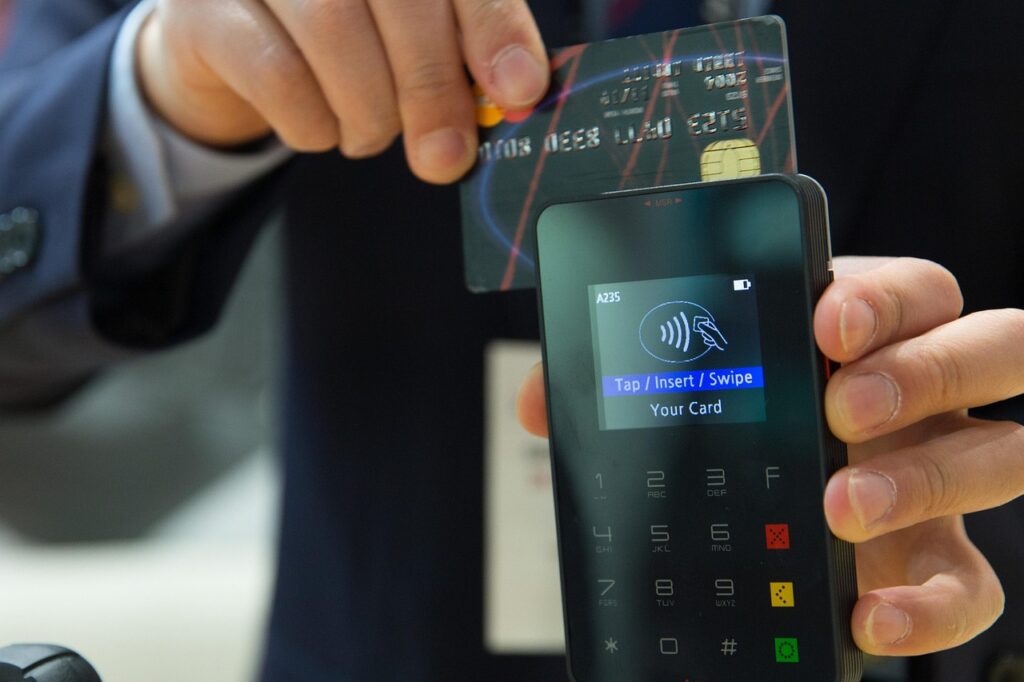

Contactless payments have become a staple in many parts of the world, with cities like London and New York adopting the technology with ease. For instance, in 2019, it was reported that over 60% of all transactions in the UK were contactless, with the average transaction value standing at around £10. However, despite their widespread adoption, there remains a significant portion of the population that is either unaware or skeptical of this technology. A common assumption is that contactless payments are less secure than traditional payment methods, a notion that is far from the truth. In reality, contactless payments employ advanced security measures to protect users’ information. This misconception, among others, has hindered the full adoption of contactless payments.
📝 Table of Contents
Breaking Down Contactless Payments
The concept of contactless payments revolves around the use of Near Field Communication (NFC) technology or Radio Frequency Identification (RFID), allowing for the transfer of funds between a payment device (such as a card or smartphone) and a payment terminal without the need for physical contact. This technology has been around for several decades but has seen a significant surge in use over the past ten years, particularly with the advent of mobile payment systems like Apple Pay and Google Pay. The ease of use and the speed at which transactions can be completed have made contactless payments a favorite among consumers and businesses alike. For example, a study conducted in Australia showed that the average time saved per transaction when using contactless payments was around 30 seconds, significantly reducing queue times in retail environments.
One of the key factors contributing to the popularity of contactless payments is their convenience. Users no longer need to worry about carrying cash or inserting their card into a machine, making the transaction process smoother and faster. Moreover, the security aspect of contactless payments is another significant advantage. Each transaction is encrypted, and the payment device must be within a very short distance of the terminal to work, reducing the risk of unauthorized transactions. The following comparison table highlights the main differences between contactless payments and traditional payment methods:
| Payment Method | Security Features | Speed of Transaction | Convenience |
|---|---|---|---|
| Contactless Payments | Encryption, NFC/RFID Technology | Fast | High |
| Cash Payments | Physical Possession | Medium | Medium |
| Card Payments (Non-Contactless) | PIN/Signature Verification | Slow | Low |
Understanding the technology behind contactless payments and their advantages over traditional methods is crucial for their widespread adoption. The integration of contactless payment systems into everyday life, such as in public transport and retail, has been pivotal in increasing their acceptance and use.
Leading Contactless Payment Solutions
1. Introduction to Apple Pay
Apple Pay, launched in 2014, was one of the first mobile payment systems to gain widespread acceptance. It allows users to store their credit or debit card information on their iOS devices, making payments as simple as holding their device near a compatible terminal. Apple Pay uses tokenization to secure transactions, replacing the actual card number with a device-specific account number. This approach significantly reduces the risk of fraud. For example, in 2020, it was reported that Apple Pay accounted for over 10% of all contactless transactions in the United States.
In detail, Apple Pay works through the Wallet app, where users can easily add their cards and start making payments. The security of Apple Pay is enhanced by the requirement of authentication via Face ID, Touch ID, or a passcode, ensuring that even if a device is lost or stolen, the payment information remains secure. Furthermore, each transaction requires a unique dynamic security code, which is validated in real-time, adding an extra layer of protection. start making payments
- Key Benefits:
- High Security: Through the use of tokenization and biometric authentication, Apple Pay offers a highly secure payment method.
- Convenience: Payments can be made with just a glance or a touch, making the transaction process incredibly simple.
- Wide Acceptance: Apple Pay is accepted at millions of locations worldwide, including retail stores, restaurants, and online shops.
2. Google Pay Overview
Google Pay, formerly known as Android Pay, is Google’s answer to Apple Pay, offering Android users a similar contactless payment experience. Launched in 2015, Google Pay allows users to make payments in stores, online, and in-app, using their Android devices. The service also supports loyalty programs and offers, making it a comprehensive payment solution. Google Pay’s security features include encryption and secure authentication, ensuring that payment information is protected.
Google Pay integrates well with other Google services, such as Google Assistant, to provide a seamless payment experience. Users can easily add their credit or debit cards to the Google Pay app and start making payments. Google Pay also supports peer-to-peer payments, making it easy to send money to friends and family. For instance, in 2019, Google announced that Google Pay had reached over 100 million downloads on the Google Play Store, highlighting its growing popularity.
- Key Benefits:
- Universal Acceptance: Google Pay is accepted at any location that accepts contactless payments, making it highly versatile.
- Integration with Google Services: Offers a seamless experience across various Google platforms.
- Easy to Use: The app is user-friendly, allowing users to easily manage their cards and make payments.
3. Introduction to Contactless Credit Cards
Contactless credit cards are another form of contactless payment that has gained popularity. These cards have a small antenna embedded in them that communicates with the payment terminal when the card is close enough. The transaction is then processed in the same way as a traditional credit card transaction, but without the need to insert the card or enter a PIN for small purchases. For example, in the UK, contactless credit cards are used for over 50% of all card transactions under £30.
The security of contactless credit cards is ensured through the use of encryption and the limitations on transaction values without PIN verification. Most banks have a contactless payment limit, beyond which a PIN is required for the transaction to proceed, adding an extra layer of security. Furthermore, the cards are designed to only work when in very close proximity to the terminal, reducing the risk of unauthorized transactions.
- Key Benefits:
- Wide Availability: Contactless credit cards are offered by most major banks, making them accessible to a wide audience.
- No Need for a Smartphone: Unlike mobile payment systems, contactless credit cards do not require a smartphone to function.
- Easy to Implement: For businesses, implementing contactless payment terminals can be straightforward, especially if they already accept traditional card payments.
4. Understanding Transport for London (TfL) Contactless Payments
Transport for London (TfL) in the UK is a prime example of how contactless payments can be integrated into public services. TfL allows commuters to use their contactless credit or debit cards, as well as mobile payment devices like Apple Pay, to pay for travel on buses, tubes, and trains. This system has seen a significant reduction in the need for physical tickets or travel cards, simplifying the commuting experience for millions of people. For instance, in 2020, it was reported that over 50% of all journeys on TfL services were paid for using contactless payments.
The system automatically caps the daily fare, ensuring that commuters pay the lowest possible fare for their travel, regardless of the number of journeys they make. This has not only made travel more convenient but also more cost-effective. The success of TfL’s contactless payment system is a model for other cities looking to adopt similar technologies for their public transport systems.
- Key Benefits:
- Convenience: No need to purchase separate travel cards or tickets.
- Cost-Effective: The daily fare capping ensures that commuters are charged the minimum fare for their travel.
- Efficiency: Reduces queues at ticket machines and gates, making the overall travel experience faster.
5. The Role of Wearable Devices in Contactless Payments
Wearable devices, such as smartwatches and fitness trackers, are also becoming popular platforms for contactless payments. Devices like the Apple Watch and Fitbit allow users to make payments directly from their wrist, offering an even more convenient payment method than smartphones. These devices typically require the user to authenticate the transaction through a passcode or biometric verification, ensuring the security of the payment process.
The integration of contactless payment technology into wearable devices reflects the evolving nature of the payments industry, with a focus on convenience, security, and innovation. As the use of wearable technology becomes more widespread, it is expected that contactless payments via these devices will become more common. For example, in 2020, it was reported that over 10 million contactless transactions were made using wearable devices in the United States alone.
- Key Benefits:
- Innovative: Offers a new and futuristic way to make payments.
- Convenient: Allows for hands-free payments, making it ideal for situations where carrying a phone or wallet might be impractical.
- Secure: Utilizes advanced security features to protect user information.
Why People Are Paying Attention
✔ Enhanced Security Enhanced Security
Contactless payments offer enhanced security features compared to traditional payment methods. The use of encryption, tokenization, and biometric authentication makes it extremely difficult for fraudsters to intercept and use payment information. For example, a study found that the introduction of contactless payments in Australia led to a significant reduction in card skimming and related fraud.
✔ Increased Convenience
The convenience of contactless payments is a major draw for consumers. The ability to make payments without the need for physical contact or the insertion of a card into a machine saves time and simplifies the transaction process. This convenience is especially beneficial in environments where speed is crucial, such as in retail and public transport.
✔ Wider Acceptance
Contactless payments are becoming increasingly accepted worldwide. More businesses are adopting contactless payment terminals, and the technology is being integrated into various public services, making it easier for consumers to use contactless payments in their daily lives. For instance, in the UK, over 50% of all retailers now accept contactless payments.
✔ Technological Advancements
The continuous advancement in technology is another reason why contactless payments are gaining attention. Improvements in NFC, RFID, and biometric authentication technologies are enhancing the security and efficiency of contactless transactions. These advancements are paving the way for more innovative payment solutions, such as payments via wearable devices.
✔ Environmental Benefits
Contactless payments can also contribute to reducing waste. By reducing the need for physical cash, receipts, and tickets, contactless payments promote a more digital and sustainable transaction environment. This aspect is particularly appealing to consumers who are environmentally conscious and looking for ways to minimize their footprint.
✔ Cost Savings
Finally, contactless payments can lead to cost savings for both consumers and businesses. The reduction in the need for cash handling and the lower costs associated with processing contactless transactions can result in significant savings over time. Additionally, the efficiency and speed of contactless payments can lead to increased customer throughput, particularly in retail environments, which can also contribute to cost savings.
The Road Ahead
- Increased Adoption of Mobile Payments
- Expansion into New Markets
- Advancements in Biometric Technology
- Integration with Other Technologies
- Regulatory Frameworks
The future of contactless payments looks promising, with an expected increase in the adoption of mobile payment systems. As more consumers become comfortable with the technology and its security, mobile payments are likely to become the norm. This shift will be driven by the convenience and security that mobile payments offer, as well as the expanding acceptance of these payments by retailers and service providers.
Contactless payments are expected to expand into new markets, particularly in regions where traditional banking services are less prevalent. The use of mobile payment systems can provide financial inclusion to underserved populations, offering them access to secure and convenient payment methods. This expansion will be facilitated by advancements in technology and the growing availability of smartphones.
Biometric authentication, such as facial recognition and fingerprint scanning, will play a crucial role in enhancing the security of contactless payments. As this technology advances, it is expected that contactless payments will become even more secure, reducing the risk of fraud and unauthorized transactions. The integration of biometric technology into wearable devices and smartphones will be pivotal in this regard.
The integration of contactless payments with other technologies, such as the Internet of Things (IoT), will create new and innovative payment experiences. For example, the ability to make payments through smart home devices or vehicles will further extend the reach of contactless payments, making them even more ubiquitous. This integration will require the development of new standards and protocols to ensure seamless and secure transactions.
As contactless payments continue to grow, there will be a need for regulatory frameworks to ensure consumer protection and prevent fraud. Governments and financial regulatory bodies will need to establish clear guidelines and standards for the industry, balancing innovation with security and consumer rights. The development of these frameworks will be critical in fostering trust and confidence in contactless payments.
| Year | Number of Contactless Transactions | Transaction Value | Growth Rate |
|---|---|---|---|
| 2020 | 10 Billion | $1 Trillion | 20% |
| 2021 | 12 Billion | $1.2 Trillion | 25% |
| 2022 | 15 Billion | $1.5 Trillion | 30% |
Worth Remembering
Contactless payments represent a significant evolution in the way we transact, offering unparalleled convenience, security, and efficiency. As technology continues to advance and more businesses and consumers adopt contactless payments, it’s clear that this method of payment is here to stay. The future of contactless payments looks bright, with potential applications in numerous sectors beyond retail and public transport. Understanding the benefits, technologies, and trends surrounding contactless payments is essential for navigating the changing landscape of financial transactions.
The integration of contactless payments into daily life, from wearable devices to public transport systems, highlights their versatility and potential for widespread adoption. As the payments industry continues to evolve, it will be interesting to see how contactless payments adapt and grow, potentially leading to a cashless society in the future.
To wrap up, the world of contactless payments is complex and multifaceted, influenced by technological, social, and economic factors. As we move forward, embracing the benefits and addressing the challenges of contactless payments will be crucial for their successful integration into our daily lives.